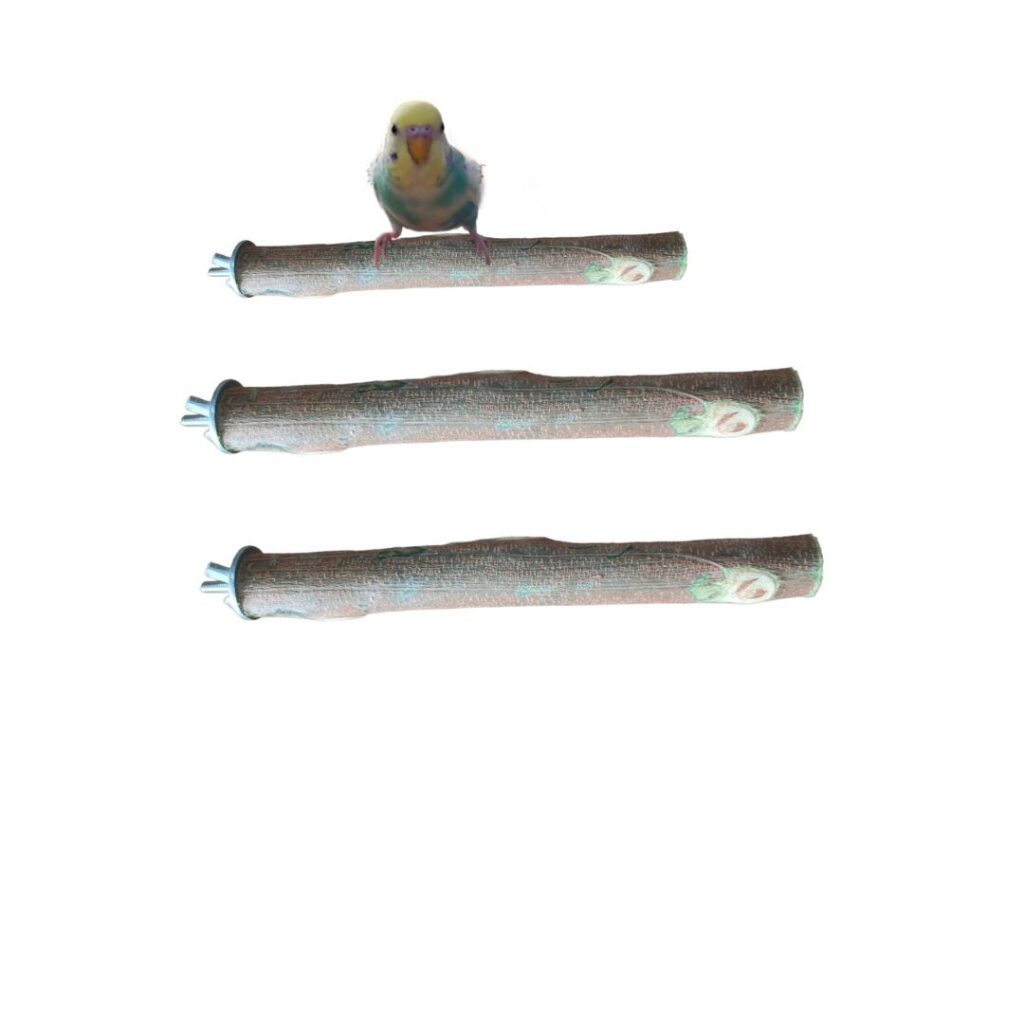
If you look inside a standard, out-of-the-box birdcage, you will almost always find a smooth, perfectly cylindrical wooden dowel. While it looks clean, it is actually one of the worst things for your bird’s long-term foot health.
In the wild, birds navigate a chaotic world of rough bark, twisting branches, and varying diameters. Replicating that dynamic environment inside their cage is vital. Here is how to choose the right wooden perches to keep your feathered friend happy, healthy, and active.
1. Ditch the Dowels: Why Texture and Shape Matter
When a bird sits on a perfectly uniform dowel perch, their feet are locked in the exact same position day in and day out. This constant, unyielding pressure on the same spots of the feet leads to a painful condition called pododermatitis (commonly known as bumblefoot or pressure sores).
Instead, you want natural wood branches.
What to Look For:
- Variable Diameters: A single branch that naturally tapers from thick to thin forces your bird to flex and stretch their foot muscles as they move along it.
- Natural Bark Texture: Rough bark provides excellent grip and naturally helps wear down your bird’s sharp claws, reducing the frequency of nail trims.
2. Getting the Right Size (Diameter)
A common mistake is buying a perch based entirely on the label at the pet store. Instead, look at how your bird’s feet interact with the wood.
The Golden Rule of Perch Sizing: Your bird’s toes should wrap comfortably around the branch, covering roughly two-thirds of its circumference. Their front claws should never meet or overlap with their back claws underneath.
Sizing Quick Reference
| Bird Size Group | Example Species | Target Perch Diameter |
| Small Birds | Finches, Canaries, Budgies | 1/2″ to 3/4″ |
| Medium Birds | Cockatiels, Conures, Caiques | 3/4″ to 1.5″ |
| Large Birds | African Greys, Amazons, Cockatoos | 1.5″ to 2.5″ |
| Extra Large | Macaws | 2.5″ to 3″ or greater |
Pro Tip: Don’t just buy one size. Mix and match slightly smaller and larger branches throughout the cage to give their feet a true workout.
3. Safe vs. Toxic Wood Types
Birds love to chew. It is a natural, instinctual behavior that keeps their beaks healthy. Because they will inevitably shred their wooden perches, you must ensure the wood species is 100% safe and chemical-free.
Approved Safe Woods
- Manzanita (incredibly hard and long-lasting)
- Dragonwood
- Java Wood
- Apple, Pear, and Citrus woods
- Ribbonwood
Woods to Avoid (Toxic or Dangerous)
- Cedar and Redwood: Contain volatile aromatic oils that irritate bird respiratory systems.
- Cherry, Peach, and Plum: Wood from these stone fruit trees can release dangerous cyanogenic glycosides when chewed.
- Fresh Pine: The sticky sap can foul feathers, though kiln-dried pine lumber is generally safe.
How to Set Up Your New Perches
1.Clean and sanitize first:Fresh out of the box.
Even store-bought perches can carry dust or pathogens. Scrub them with a bird-safe disinfectant or a 5% apple cider vinegar solution, rinse thoroughly, and let them dry completely in the sun before installing.
2.Place the main perch high:The sleeping spot.
Birds instinctively prefer to sleep at the highest point in their cage. Place your sturdiest, most comfortable natural wood perch near the top back corner as their designated night perch.
3.Stagger secondary perches:Clear the flight path.
Arrange other branches at alternating heights to encourage climbing and hopping, but keep the central core of the cage open so they can stretch and flap their wings freely.
4.Avoid the ‘Poop Zone’:Keep it clean.
Never position a perch directly underneath another perch, or directly over food and water dishes. If they can poop on it from above, move it!
The Takeaway
Investing in three to four high-quality, varied natural wood perches is one of the simplest things you can do to prevent costly vet bills and enrich your bird’s daily life. Watch how they navigate their cage—if they have a favorite spot, make sure it’s the healthiest surface possible!